
Saturday, March 21, 2015

Sunday, March 15, 2015

Saturday, March 14, 2015

Friday, March 13, 2015

Thursday, March 12, 2015
What is music?
Music is an art form whose medium issound. Its common elements are pitch(which governs melody and harmony),rhythm (and its associated concepts tempo,meter, and articulation), dynamics, and the sonic qualities of timbre and texture. The word derives from Greek μουσική (mousike; "art of the Muses").
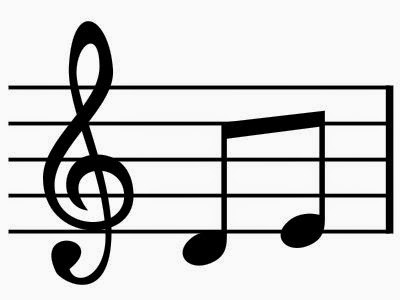
The creation, performance, significance, and even the definition of music vary according to culture and social context. Music ranges from strictly organized compositions (and their recreation in performance), through improvisational music to aleatoric forms. Music can be divided into genres and subgenres, although the dividing lines and relationships between music genres are often subtle, sometimes open to personal interpretation, and occasionally controversial. Within the arts, music may be classified as aperforming art, a fine art, and auditory art. It may also be divided among art music andfolk music. There is also a strong connection between music and mathematics. Music may be played and heard live, may be part of a dramatic workor film, or may be recorded.
To many people in many cultures, music is an important part of their way of life. Ancient Greek and Indian philosophers defined music as tones ordered horizontally as melodies and vertically as harmonies. Common sayings such as "the harmony of the spheres" and "it is music to my ears" point to the notion that music is often ordered and pleasant to listen to. However, 20th-century composer John Cage thought that any sound can be music, saying, for example, "There is no noise, only sound."
Sunday, March 8, 2015
International Woman's Day
International Women's Day (IWD), also called International Working Women's Day, occurs on March 8 every year.Started as a Socialist political event, the holiday blended in the culture of many countries, primarily in Europe, especially those in the Soviet Bloc. It is a day to emphasize the femenistic struggle for womens rights. In some regions, the day has lost its political charge, and has become simply an occasion for men to express their love for women in a way somewhat similar to a mixture of Mother's Day and Valentine's Day. In other regions, however, the political and human rights theme designated by the United Nations runs strong, and political and social awareness of the struggles of women worldwide are brought out and examined in a hopeful manner. This is a day which some people celebrate by wearing purple ribbons.
 In Vienna, women paraded on the Ringstrasse and carried banners honouring the martyrs of the Paris Commune. Women demanded that women be given the right to vote and to hold public office. They also protested against employment sex discrimination.Americans continued to celebrate National Women's Day on the last Sunday in February.
The earliest Women’s Day observance was held on February 28, 1909, in New York; it was organized by the Socialist Party of America in remembrance of the 1908 strike of the International Ladies' Garment Workers' Union.[3] There was no specific strike happening on March 8, despite later claims.[4]
In August 1910, an International Women's Conference was organized to precede the general meeting of the Socialist Second International in Copenhagen, Denmark. Inspired in part by the American socialists, German Socialist Luise Zietz proposed the establishment of an annual 'International Woman's Day' (singular) and was seconded by fellow socialist and later communist leader Clara Zetkin, although no date was specified at that conference. Delegates (100 women from 17 countries) agreed with the idea as a strategy to promote equal rights, including suffrage, for women. The following year, on March 19, 1911, IWD was marked for the first time, by over a million people in Austria, Denmark, Germany and Switzerland. In the Austro-Hungarian Empire alone, there were 300 demonstrations.
Tuesday, March 3, 2015
New communication tecnology
Information and communications technology (ICT) is often used as an extended synonym for information technology (IT), but is a more specific term that stresses the role of unified communications and the integration oftelecommunications (telephone lines and wireless signals), computers as well as necessary enterprise software, middleware, storage, and audio-visual systems, which enable users to access, store, transmit, and manipulate information.
The term ICT is also used to refer to theconvergence of atelephone networks with computer networks through a single cabling or link system. There are large economic incentives (huge cost savings due to elimination of the telephone network) to merge the telephone network with the computer network system using a single unified system of cabling, signal distribution and management.


The phrase Information and Communication Technology has been used by academic researchers since the 1980s, and the termICT became popular after it was used in a report to the UK government by Dennis Stevenson in 1997 and in the revisedNational Curriculum for England, Wales and Northern Ireland in 2000. But in 2012, theRoyal Society recommended that the termICT should no longer be used in British schools "as it has attracted too many negative connotations", and with effect from 2014 the National Curriculum was changed to use the word computingreflecting the addition of computer programming to the curriculum. A leading group of universities consider ICT to be a soft subject and advise students against studying A-level ICT, preferring instead A-level Computer Science.
Subscribe to:
Comments (Atom)